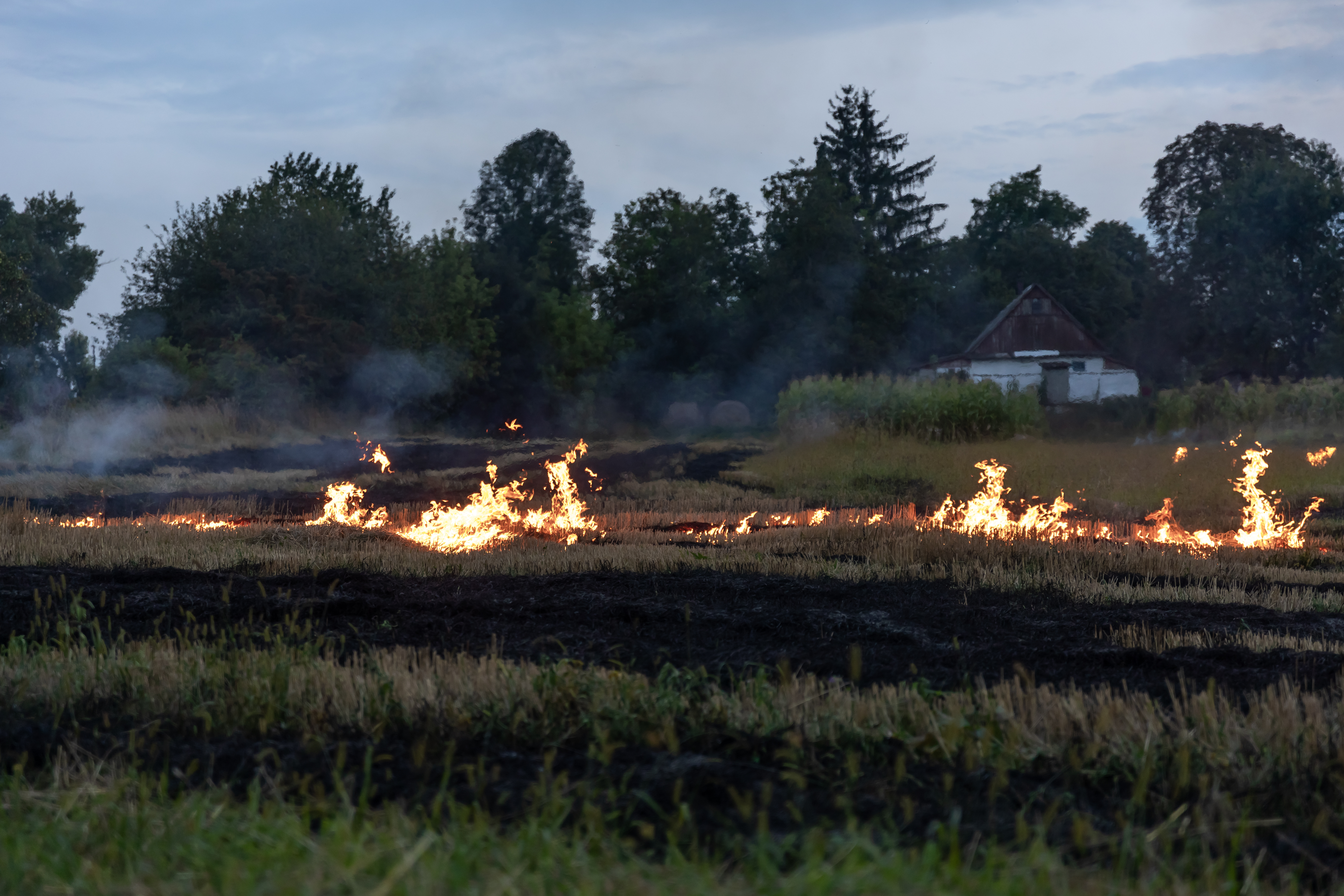
How Europe Is Tackling Its Largest Wildfires
Hundreds of thousands of people have been forced to leave their homes as wildfires continue to burn across France and Spain, creating one of Europe's most significant fire emergencies in years.
More than 300,000 people have been evacuated as fires spread rapidly through forests, farmland and communities, fuelled by prolonged heatwaves, dry vegetation and strong winds. Authorities have described the fires near Madrid as the largest in the region's history, while France is experiencing its most severe wildfire season in two decades.
For fire and rescue services, the incidents demonstrate the growing complexity of responding to large-scale fires that increasingly threaten people, infrastructure and essential services.
A changing operational picture
In central Spain, fires have burned through around 660 square kilometres of land since the beginning of July, while in France's Gironde region more than 420 square kilometres have been destroyed in just a few days.
Beyond the scale of the destruction, the fires have forced emergency services to protect homes, industrial sites and transport infrastructure simultaneously. In southwest France, the fire front has advanced towards areas containing defence facilities and hazardous industrial operations, adding further complexity to an already challenging response.
Large-scale evacuations on this scale place immense pressure on emergency responders, requiring close coordination between fire and rescue services, police, ambulance services, local authorities and the military.
When wildfires create their own weather
One of the most challenging aspects of the current incidents has been the formation of pyrocumulonimbus clouds, more commonly referred to as fire clouds.
These develop when the intense heat generated by a wildfire forces smoke, ash and moisture high into the atmosphere. In some cases, the clouds can generate lightning, creating new fire starts many kilometres away from the original incident while producing unpredictable fire behaviour.
For incident commanders, these conditions can dramatically alter the operational environment and make suppression efforts a lot more dangerous.
A multi-layered response
The response across France and Spain highlights the range of tactics now required to combat major wildfires.
Firefighting aircraft have played a crucial role, including water-bombing planes capable of collecting thousands of litres of water directly from lakes and coastal waters before returning to the ground within minutes. Aircraft have also been used to lay fire retardant ahead of advancing flames, slowing the spread long enough for crews on the ground to establish containment lines.
On the ground, thousands of firefighters have worked alongside the military, police officers and specialist teams to protect communities. Heavy machinery has been deployed to create wide firebreaks, removing vegetation ahead of the fire and limiting the available fuel.
Despite these efforts, officials have acknowledged that the scale of the incidents is stretching available resources, reinforcing the importance of mutual aid and cross-border cooperation during major wildfire events.
Building resilience for the future
As temperatures continue to rise across much of Europe, fire services are increasingly responding to longer wildfire seasons and more intense fire behaviour.
These incidents highlight the importance of investing not only in suppression capabilities, but also in prevention, landscape management, early detection and community preparedness. Public awareness, resilient infrastructure and effective planning all have an important role to play in reducing the impact of future wildfires.
While the immediate focus remains on supporting affected communities and bringing the fires under control, the events unfolding across France and Spain serve as another reminder that wildfire resilience is becoming an increasingly important part of modern fire and rescue operations across Europe.
Register your Interest for the Fire Safety Event 2027 | NEC Birmingham | 27-29 April 2027: The Fire Safety Event.
Subscribe to Fire Safety Digital for monthly updates.